Is It Safe To Upload PDF To Word Converters?
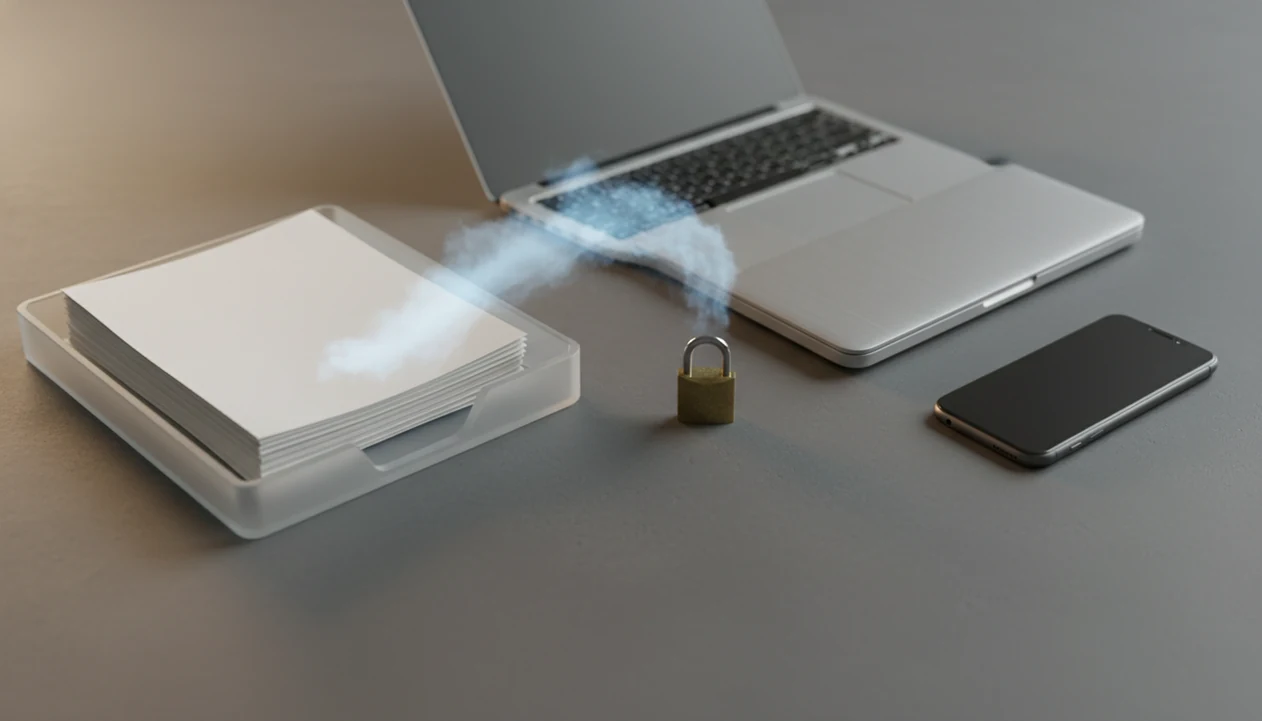
Yes, but is it safe to upload PDF to Word depends on the converter’s encryption, retention policy, deletion process, and whether your PDF contains sensitive information. Treat every upload as a potential exposure unless you trust the provider and understand what happens to your file.
> This guide evaluates upload privacy and security risk for PDF-to-DOCX converters. It is general safety guidance, not legal, compliance, or cybersecurity advice.
- Use a reputable PDF to Word converter with HTTPS, clear deletion rules, and a privacy policy you can actually understand.
- Avoid uploading tax forms, IDs, medical records, contracts, or financial PDFs unless the provider’s data handling meets your risk and compliance needs.
- On-device conversion can reduce PDF upload privacy risk, while server-side conversion may be more capable but exposes the file to cloud processing.
PDF Upload Privacy At A Glance
Uploading a PDF to Word is usually reasonable for low-risk files, but risky for sensitive files. A safe online PDF converter should use HTTPS, explain retention, describe deletion, and have a provider you can identify and contact.
Search ranking is not a safety audit. A polished upload page can still use unclear storage terms, ad networks, or broad analytics. We’ve seen harmless school handouts convert fine, then watched users pause when the next file was a signed lease with account numbers in the footer. Different file, different risk.
For ordinary flyers, public forms, and non-sensitive templates, a reputable converter may be acceptable. For IDs, tax returns, contracts, bank statements, and medical records, treat upload as disclosure unless the provider’s policy and controls match the document’s sensitivity.
Low-risk files can often be uploaded to a reputable converter; sensitive PDFs should be redacted, processed offline, or handled under a stricter agreement.
Scope: What This Safety Guide Can And Cannot Verify
This guide can help you spot common privacy and security questions before uploading a PDF, but it cannot certify that any converter is safe for your exact file. It is general information, not a replacement for legal, compliance, or cybersecurity advice.
Provider controls also change. A service may revise its retention period, move processing to a new cloud vendor, add analytics, change support access, or update its subprocessors after you last checked. That matters because PDF conversion often touches the full document, not just the visible text you want in Word.
Before using a converter for anything sensitive:
- Review the current privacy policy and terms for uploaded file handling.
- Confirm the stated retention period, auto-delete timing, and manual deletion options.
- Check whether subprocessors, cloud hosts, support tools, analytics, or ad services may access related data.
- Ask the provider directly if the policy does not clearly cover uploads, backups, logs, and deletion.
- Choose offline, approved, or contract-covered workflows when the answer is unclear.
Five Facts About Safe Online PDF Converter Risk
- PDF upload safety depends more on the converter’s privacy policy, retention period, and security practices than on the PDF format itself.
- A safer converter should use HTTPS/TLS and state when uploaded files are deleted, not just say “secure” on a landing page.
- Uploaded PDFs may be processed by provider systems, support tools, logging systems, cloud vendors, or subprocessors.
- Official iPhone and Android app stores are generally safer than random ad-driven converter sites, especially when the developer name and update history are clear.
- GDPR, CCPA, HIPAA-adjacent workflows, and contract obligations may matter for business, health, legal, or financial documents.
Small detail, big clue: if a privacy policy never mentions uploaded files, storage location, or subprocessors, assume you still do not know the risk.
Good PDF to Word converter apps that convert PDF files to editable DOCX Word documents on iPhone and Android deliver editable files, not a guarantee that every upload is private, compliant, or risk-free.
How PDF Conversion Works
A converter reads the source file, extracts text or runs OCR, detects layout elements, generates an editable DOCX, and returns the result. The privacy question is where those steps happen: locally on your device or on a provider’s servers.
A PDF that looks selectable may still behave like an image when you long-press it. That is usually when OCR enters the workflow. The converter may inspect page zones, headings, columns, tables, and fonts before building the Word file. After download, you still need a formatting check in Microsoft Word mobile before sending it back.
On-device PDF conversion
On-device conversion processes the PDF locally on the iPhone or Android device. It can reduce upload exposure, but it may struggle with large scanned PDFs, dense tables, or complex layouts.
Server-side PDF conversion
Server-side conversion uploads the PDF to cloud systems for parsing, OCR, layout detection, DOCX generation, and download. It can improve OCR and complex layout handling, but it increases exposure because the file leaves your device. The offline vs cloud PDF to Word choice is mainly a privacy and capability tradeoff.
File Upload Safety Checklist Before Converting
Is this file safe to upload? Check the connection, the provider, and the document contents before you press upload.
- Confirm HTTPS in the browser, or install mobile apps only from official app store listings.
- Read the privacy policy for file access, storage location, subprocessors, analytics, and ad networks.
- Look for clear retention and auto-delete language, not vague phrases like “your files are protected.”
- Avoid uploading sensitive files unless required legal, business, or compliance protections are in place.
- Keep the app and your phone operating system updated before handling private files.
The thumb-hover moment is real. If the upload button feels wrong because the uploaded file includes a passport scan or payroll table, stop and choose a safer workflow.
The U.S. Federal Trade Commission advises businesses to protect consumer data with encryption in transit and retention limits, which are directly relevant to PDF upload services source.
Safe PDF Upload Decision Table For Sensitive Files
Use the file’s sensitivity, not the converter’s convenience, to decide whether upload is acceptable. If the PDF would cause harm if exposed, do not treat conversion as a routine formatting task.
| File type | Risk level | Recommended action |
|---|---|---|
| Public flyers, event sheets, public brochures | Low | Use a reputable converter with HTTPS and clear deletion terms. |
| School handouts, non-sensitive templates | Low | Upload is usually acceptable after checking the provider. |
| Resumes, invoices, ordinary work documents | Medium | Remove unnecessary personal details and review the provider’s retention policy. |
| Internal reports, client documents, marked-up drafts | Medium to high | Prefer approved tools, on-device processing, or a business account with clear terms. |
| IDs, bank statements, medical records, tax documents | High | Avoid upload unless strict protections are confirmed. Redact or process offline. |
| Legal contracts and signed agreements | High | Use approved systems, redaction, or legal review before conversion. |
Numbered contract clauses can shift by half a line after conversion. For confidential contract PDF to Word work, privacy and layout review both matter.
Common Myths About PDF Upload Privacy
Myth 1: A free converter is safe if it ranks in search. Search visibility does not prove encryption quality, deletion behavior, or responsible file handling.
Myth 2: HTTPS means the company cannot access the PDF. HTTPS protects the upload in transit. It does not prevent server-side processing, storage, staff access, or subprocessors.
Myth 3: Delete-after-conversion always removes every copy. Backups, logs, cache layers, support tickets, and abuse-monitoring systems may have different retention rules.
Myth 4: Every mobile converter works privately offline. Some mobile apps process files locally; others upload them for OCR or layout reconstruction.
Myth 5: PDFs are always harmless documents. CISA warns that phishing and malicious documents are common infection risks, so use trusted apps and avoid suspicious files source.
A student opening a lecture handout from the Files app five minutes before class has a different risk profile than someone uploading a medical scan. The medical PDF to Word safety question deserves stricter handling.
Trustworthy PDF To Word App Disclosures
A trustworthy PDF to Word provider should disclose encryption in transit, retention period, deletion process, server location, support contact, privacy policy, and subprocessors. These details matter more than broad claims such as “private,” “secure,” or “encrypted.”
Tools like PDF To Word App focus on converting PDFs into editable DOCX documents for iPhone and Android users, but users should still verify how a specific workflow handles files. Retention minimization matters because every extra stored copy increases exposure time. IBM breach reporting has also shown that cloud storage and processing are common parts of modern data exposure scenarios.
One quiet habit helps: after a sensitive conversion, delete the local copy from Recents if you no longer need it. Not glamorous. Useful.
For deeper policy review, the PDF to Word app privacy guide explains what to look for in retention and file handling language.
When To Use Approved IT, Legal, Or Compliance Review
Use approved review when the PDF contains client records, employee data, regulated information, or anything that would create legal, financial, medical, or identity harm if exposed. In those cases, conversion is not just a formatting step; it is a data-handling decision.
For workplace files, default to sanctioned tools and documented processes instead of a quick self-service upload. Signed contracts, litigation discovery, medical files, tax packets, ID scans, payroll records, bank statements, and similar documents should stay inside approved systems unless legal, compliance, IT, or security teams say otherwise.
- Use workplace-approved conversion tools for client, employee, confidential, or regulated records.
- Ask legal to review the workflow before converting signed agreements, contract exhibits, discovery materials, or files under a hold.
- Check with IT or security before relying on a cloud-processing vendor, especially if OCR or server-side conversion is involved.
- Avoid uploading medical, tax, identity, or banking PDFs to public self-service tools unless your organization has approved that exact workflow.
- Document the provider’s retention, deletion, backup, and support-access terms before adding the converter to a business process.
If no one can confirm the rules, pause. A slower approved path is safer than guessing after the file has already left your device.
Limitations
No online PDF to Word converter can guarantee absolute security. Even a careful provider can face risks outside the conversion page itself.
- Data breaches, software vulnerabilities, insider threats, misconfigured storage, and cloud account mistakes remain possible.
- Public Wi-Fi can expose you to network risks, especially if the site or app is poorly implemented.
- Infected phones can undermine otherwise strong converter security.
- Free apps may rely on analytics, ads, or tracking that affects PDF upload privacy.
- On-device conversion can reduce exposure, but it may struggle with large PDFs, scanned pages, and complex tables.
- Server-side OCR may produce a better DOCX, but it means the source PDF leaves your device.
- “Private,” “secure,” and “encrypted” should be verified in policy details, not accepted as standalone proof.
- Password-protected PDFs may require decryption before conversion, which can change the risk calculation.
For a more direct storage-focused question, the guide on does PDF to Word app store files covers retention language in more detail.
FAQ
Is online document conversion safe?
Online document conversion can be safe for low-risk files when the provider uses encryption, clear retention limits, and responsible file handling. It is riskier for sensitive documents because the file may be uploaded, processed, or stored.
Can online converters read my PDF?
Server-side conversion tools may process the contents of your PDF to extract text, detect layout, run OCR, and create a DOCX. Depending on the provider, systems, staff, or subprocessors may have technical access.
Is HTTPS enough to protect an uploaded PDF?
HTTPS protects the PDF while it travels between your device and the converter. It does not control server storage, deletion timing, staff access, backups, or later processing.
Are free online converters safe to use?
Some free conversion tools may be safe for low-risk files, but you should check their privacy policy, ads, tracking, retention terms, and support contact. Avoid free tools for sensitive documents unless their protections are clear.
Should I upload bank statements to a conversion tool?
You should generally avoid uploading bank statements to a converter unless strong protections, retention limits, and a trusted provider are confirmed. Redaction or offline conversion is safer for highly sensitive financial PDFs.
Is mobile conversion more private?
Mobile conversion can be more private if the app processes files on-device. If the iPhone or Android app uploads files to servers, the privacy risk is similar to other cloud conversion workflows.
Do online converters store my files?
Some providers store uploaded files temporarily, while others may retain files, logs, or backups for longer periods. Check the provider’s retention and deletion timeline before uploading.
Can PDF files contain malware?
Yes, PDF files can be used in malicious document attacks, especially when they come from suspicious emails, links, or unknown senders. Use trusted apps and avoid opening or uploading suspicious PDFs.
How do I check a PDF converter’s privacy practices?
Check the privacy policy for PDF upload privacy details, retention timing, encryption, subprocessors, server location, analytics, and a support contact. If those details are missing, treat the upload as higher risk.